Skip to content

Trenchless Sewer Replacement in National City, CA
National City has some of the oldest residential housing stock in South San Diego County — much of it built before 1960, with original Orangeburg fiber-conduit or vitrified clay sewer laterals well past their 50-year design life. Combine that with bayfront soil (high water table, sandy clay) and you get a city where trenchless sewer replacement is often the only sane option for a failing line.
Trenchless Sewer Replacement in National City, CA
Local Sewer Insight: National City
National City is a dense South Bay city of roughly 61,000 and one of San Diego County’s oldest, with housing stock dating to the early 1900s. Original clay and cast-iron sewer lines paired with shifting bayfront soil make no-dig trenchless replacement ideal here. We see this most across Old Town, Kimball, and the Granger Hills neighborhoods.
In National City’s tight, close-set lots, trenchless work means we rarely disturb shared driveways, sidewalks, or a neighbor’s property to get a century-old line flowing again.
Trenchless Sewer Conditions Across National City
National City is one of San Diego County’s oldest incorporated cities, and a lot of its housing stock predates 1950. That history is wonderful for character and brutal for plumbing: many homes between Highland Avenue and the bayfront still run original clay or even early cast-iron sewer laterals that have been in the ground for the better part of a century. Decades of corrosion, joint separation, and ground settlement near the filled bay margin leave these lines cracked, scaled, and prone to backups, and the tight urban lots make traditional excavation especially disruptive.
Because National City lots sit so close together, an open trench rarely stays on one property. The sewer lateral often runs under a shared driveway, a narrow side yard, or right out to a busy street like 8th, 18th, or Plaza Boulevard. Trenchless replacement keeps the work contained to small access points, so we can rehabilitate a line without cutting a neighbor’s driveway, closing a lane, or pulling permits to trench a county road. For dense neighborhoods that matters as much as the pipe itself.
Soil is the third issue. Parts of National City near the Sweetwater channel and the old bayfront sit on fill and soft, moisture-holding ground that settles over time and pulls rigid clay joints apart. A cured-in-place liner bridges those joints with a single smooth pipe that flexes with minor settlement instead of cracking at every connection, which is why lining outperforms spot patching on so many of the older homes here.
Areas of National City we serve: Old Town National City, Kimball Park, Granger Hills, Lincoln Acres, El Toyon, the Highland Avenue corridor, the 24th Street and Plaza Boulevard areas, and the neighborhoods bordering Paradise Hills and Chula Vista.
If your National City home is from the 1940s or earlier and you have never had the sewer lateral inspected, that is the single best place to start. Recurring backups, slow tubs and floor drains, or a sewage smell in the yard usually mean the original clay or cast-iron line is failing, and a quick camera run tells us whether a liner, a pipe burst, or a targeted spot repair is the right call before you pay for anything.
Old Sewer Line Failing in National City, CA?
Signs Your Sewer Line Needs Replacement in National City, CA
National City is one of the older corners of South Bay. Bungalows from the 1920s and 30s up along Highland and Roosevelt sit on Orangeburg or original clay laterals — material that is way past its design life. We get the call usually after the second main-line clear in six months: the snake keeps pulling roots back up, the line is bellied somewhere we cannot see, and the next backup is a question of when, not if. Trenchless lets us replace it without tearing out the slab walkway or the front porch.
On a typical National City lot, the trenchless conversation starts with what the camera shows about the original Orangeburg or clay pipe condition. Trenchless sewer replacement covers four primary methods, plus camera inspection as the diagnostic step that determines which method fits a given line. The right call depends on what the camera shows: pipe material, severity of damage, line condition end-to-end, depth, and access constraints on the lot. The four methods below cover the realistic options for a National City residential lateral or a small commercial line. We walk you through which one is right for your specific situation as part of the on-site quote, including the trade-offs between methods on cost, longevity, and disruption.
CIPP Liners for National City, CA Properties
CIPP — Cured-In-Place Pipe — saturates a felt liner with epoxy resin, inverts it through the existing line, and cures it into a hard inner pipe. The original pipe is essentially abandoned in place; the cured liner becomes the new pipe. Best fit for older National City lines where the clay or cast-iron host is still holding shape but is leaking at the joints or showing surface corrosion. On most National City laterals, a single cleanout at the house provides the access needed for the inversion — no excavation at all in the right cases.

Slip Lining as a National City, CA Trenchless Option
Slip lining is the simplest method — a smaller-diameter pipe slid through the existing line, fixed in place. Loses some flow capacity in exchange for speed and minimal setup. Works for oversized commercial laterals or for jobs where bursting access is constrained by a tight National City lot. National City cases where slip lining works best are usually older 6-inch laterals serving a current 4-inch demand.
Spot Repair Versus Full Replacement in National City, CA
When the camera shows one clear failure point — a single root mass at a joint, a single broken section — sectional repair fixes it without replacing the whole line. A short CIPP sleeve cured over the damaged section, or a small open-pit spot repair. Right call when the rest of the line is sound. On a National City property, sectional repair often means saving thousands on a line that has 95% of its life left.
Why Camera Inspection Comes Before Trenchless in National City, CA
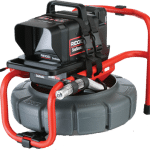
Every trenchless quote starts with a sewer camera inspection from the cleanout to the city tap. The footage shows pipe material, joint condition, root intrusion, breaks, and grade. On National City lines we frequently see Orangeburg deformation (the fiber pipe oval-collapses under load over decades) and clay-joint root masses. The inspection determines which method fits and where the pits go. We give you a copy of the National City camera footage either way — you keep it for your home’s records.
When Trenchless Beats Open-Trench in National City, CA
Trenchless wins in National City whenever the front yard, sidewalk, or driveway has anything worth keeping — a mature California pepper, a stamped concrete driveway, the original sidewalk-pavers along the older blocks of D and E Avenues. Trenchless also wins on the deep city-main connections common in older South San Diego County neighborhoods, where open-trench means sheet piling and shoring. Open-trench is still right for very shallow runs on raw lots or for lines with multiple collapses too severe to pull through.
Soil composition matters too. National City’s harborfront properties have a high water table and sandy clay soil that shifts under decades of tide cycling. Open-trench excavation in those conditions means shoring, dewatering, and continuous side-wall management. Trenchless avoids all of it — the existing pipe path is already through whatever the original installer dealt with.
What Trenchless Sewer Replacement Costs in National City, CA
Trenchless sewer replacement in National City typically runs $4,200 to $11,000 for a residential lateral. Shorter lines (under 40 feet, shallow grade) come in lower; longer runs to deep city taps push higher. Most jobs land in the $5,500–$8,500 range. The camera inspection cost is credited toward the final job if the work proceeds. Larger commercial laterals scale higher; multi-unit properties under one parcel may qualify for a unit-rate discount across the entire job.
What to Expect on Job Day in National City, CA
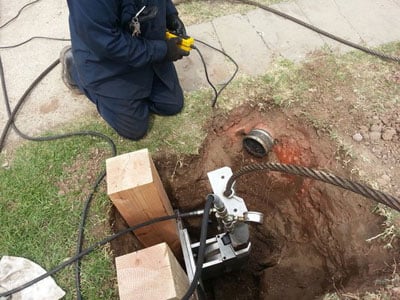
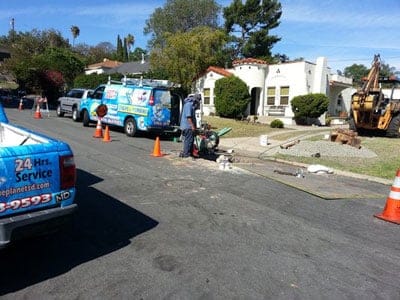
A National City trenchless day usually starts at 7 AM at the older properties along D and E Avenues, where street parking is tight and an early start avoids commuter traffic. Trenchless sewer replacement on a typical National City property follows a predictable timeline. Crew arrives early — usually 7 or 8 AM — sets up cone barriers around the work zone, and digs the two access pits (one at the cleanout, one at the property line near the city main). Pit excavation takes 2-3 hours depending on depth and soil. The bursting equipment is set up at the pull pit, the steel cable is threaded through the existing line, and the bursting head is attached at the entry pit. By mid-morning the actual replacement is underway.
Why Homeowners in National City, CA Choose Trenchless Sewer Replacement
National City homeowners choose trenchless because tight lot frontages on the historic streets leave no realistic room for the dump trucks and sheet piling open-trench would require. Three things drive most National City trenchless decisions. First, much of the housing stock is 60+ years old with original Orangeburg or vitrified clay laterals — failure is not a question of if but when. Second, dense lots in the older neighborhoods leave no room for an open-trench dig and dump-truck staging. Third, the proximity of the bayfront and the water-quality regulations that come with it favor minimal-disturbance work whenever possible.
Frequently Asked Questions About Trenchless Sewer Replacement in National City, CA
Yes, in most cases. Orangeburg (a 1940s tar-impregnated wood-fiber conduit) fragments cleanly under pipe bursting. We confirm with camera inspection that the line still holds shape enough for the bursting head to track.
Pits below the water table need temporary dewatering during the work — a small pump runs to keep the access clean. Adds an hour to setup but does not change feasibility.
Yes. Any work touching the connection to the city main goes through the City of National City Building Department. We file the permit and schedule the inspection as part of the job.
Yes. Commercial work and HOA-managed property work are both standard. The same trenchless methods scale from 4-inch residential laterals to 6-inch and 8-inch commercial laterals.
Camera inspection within 24 hours, quote same-day, work scheduled within 48-72 hours for non-collapse jobs. For active backups we deploy temporary pumping and bypass while planning the permanent fix.
Moderate noise during the bursting pull — about the level of a small backhoe running, for 30-90 minutes. Much quieter overall than open-trench excavation.
Materials and Warranty on Trenchless Work in National City, CA
For National City installs, the HDPE we use is salt-resistant — a meaningful factor in the bayfront properties where galvanized fittings used to corrode within a decade. New HDPE pipe carries a manufacturer-rated 50-year service life under normal residential conditions, and most install settings push that further because the new pipe sits inside the original excavation path with no joint failure points. The pipe is approved by ASTM and the California Plumbing Code for residential and commercial sewer service. Our workmanship warranty covers the install for one year against any defect in the work itself; the manufacturer warranty on the pipe extends well beyond that. After the install, we leave you a copy of the camera footage and a service record for your home’s permanent files.

Get a Free Trenchless Quote in National City, CA
Trenchless vs. Traditional Sewer Repair
Related Plumbing Services in National City, CA
Sewer and drain expertise across National City and San Diego County.
OUR SERVICE AREA
View on Google MapsWhy National City Homes Need Trenchless
National City has some of the oldest housing in the South Bay, and that’s exactly where trenchless earns its keep. In the neighborhoods around Old Town and the early-1900s blocks west of Highland, original clay and cast-iron sewer laterals have spent a century corroding and cracking, and the flat, densely built lots leave little room to trench without hitting walkways, alleys, or a neighbor’s line. Pipe bursting pulls a new smooth pipe through the old path from compact access pits, so the street and sidewalk stay intact.
The low coastal elevation here also means a high water table that floods open trenches and slows traditional digs to a crawl. Trenchless sidesteps that entirely. We start with a camera inspection to confirm the lateral’s condition and locate the city connection, then line or burst the run in a day for most homes. Pricing is set up front, with no surprise add-ons after the crew arrives.
Recent work in National City
- Sewer main line replacement in National City, CA
- Water leak repair in apartments, National City
- Hydrojetter service in National City, CA
For slab leaks, drain cleaning and commercial work locally, see our National City plumber page.