Skip to content


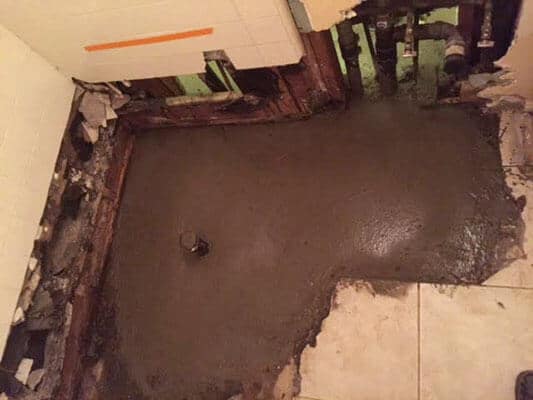
A slab leak insurance claim is one of the most-misunderstood plumbing-related claims homeowners file in San Diego. The standard answer “yes, my homeowner’s insurance covers slab leaks” turns out to be only half-true — the policy usually covers the damage from the leak, but rarely the leak repair itself. Understanding what’s actually covered before you call your insurer determines whether you get a good outcome or a denial.
The Big Distinction: Damage vs. Repair
Standard California homeowner’s insurance policies typically include two categories of slab leak coverage that work differently:
- Water damage caused by the leak: usually COVERED — flooring, drywall, cabinets, personal property destroyed by the water
- Pipe repair (fixing the actual leak): usually NOT COVERED — considered “wear and tear” or “maintenance”
- Access cost (jackhammering the slab to reach the pipe): sometimes COVERED under “tear-out” coverage if your policy has it
- Mold and mildew: partially COVERED depending on the cause and your policy’s mold sublimit
The Insurance Information Institute publishes the standard policy framework that most carriers follow, with regional variations. Your specific policy is the source of truth — read it before you have a claim.
What Determines Whether Your Claim Gets Paid
Insurance adjusters look for specific factors:
- Was the leak SUDDEN or GRADUAL? Sudden = typically covered. Gradual = typically denied as “neglect”
- How long did the leak run before you noticed? Days = usually covered. Months = often denied
- Did you take “reasonable steps” to prevent or mitigate damage? If you noticed warm floors months ago and ignored them, the carrier may deny the claim
- Was the pipe failure due to normal wear or external cause? External cause (settling, earthquake, root pressure) tends to be covered; normal wear of old copper does not
- Documentation: photos, water bills showing usage spikes, and timeline of when symptoms appeared all support the claim
The 24-Hour Window Matters
Most policies require you to notify the insurer within a reasonable timeframe of discovering a covered loss — typically interpreted as within 24-72 hours. Waiting weeks to file weakens your claim significantly. The moment you confirm you have a slab leak:
- Document the damage (photos, video, water meter readings)
- Shut off the water at the main if leak is ongoing
- Call your insurer to open a claim
- Call a licensed plumber for detection and repair
- Call a water damage restoration company if there’s visible flooring or wall damage
What Your Plumber’s Documentation Should Include
The plumber’s invoice and report becomes critical for the insurance claim. Insist on:
- Written diagnosis (where the leak was, how detected, what caused it)
- Photos of the leak point and surrounding pipe condition
- Itemized invoice separating repair work from damage assessment
- Statement on whether the leak was sudden or longstanding (this affects coverage)
- Estimate for any related work (re-pipe recommendations, etc.)
Working With an Adjuster
When the insurance adjuster comes out, they’re evaluating both the cause and the extent of damage. Be prepared:
- Have your plumber’s report ready
- Show all damaged areas (not just the obvious ones)
- Have receipts for any emergency mitigation work you paid for
- Get the adjuster’s claim number and direct contact
- Don’t agree to a settlement on the spot — review with a contractor first
If you feel the carrier is undervaluing the damage, a public insurance adjuster (different from the carrier’s adjuster) represents your interests for a percentage of the settlement. For related needs, we recommend policyholder claim advocacy.
Common Reasons Slab Leak Claims Get Denied
- “Continuous and gradual” — leak was clearly running for weeks or months before reported
- “Wear and tear” — old copper failing from normal age, not a sudden event
- “Lack of maintenance” — homeowner failed to act on early warning signs
- “Excluded peril” — earthquake or earth movement excluded from standard policies (need separate earthquake coverage)
- “Mold sublimit exceeded” — mold damage exceeded the policy’s specific mold coverage cap
The Hard Truth: Coverage Varies Wildly
Two San Diego homeowners with seemingly similar policies from different carriers can have dramatically different outcomes on the same slab leak. Some carriers (USAA, Amica) have a reputation for paying slab leak claims fairly. Others fight harder. The California Department of Insurance publishes complaint data on individual carriers — worth a look when shopping policies.
Preventive Move: Review Your Policy Before You Need It
Right now (before a slab leak happens), pull out your homeowner’s policy and look up:
- Water damage coverage limits
- Whether “tear-out” coverage is included (for accessing the leak)
- Mold/mildew sublimit
- Sewer backup endorsement (separate add-on, usually worth having)
- Deductible amount
If anything is missing or insufficient, call your agent and adjust before you need to use it.
Your San Diego Slab Leak and Insurance Coordination Specialists
Blue Planet Drains & Plumbing provides insurance-ready documentation for slab leak repair claims across San Diego County — Chula Vista, San Diego, Bonita, Coronado, La Jolla, Del Mar, Carlsbad, Oceanside, Poway, and surrounding communities. Our slab leak repair service includes the written report, photo documentation, and cause assessment your insurance adjuster will need to process the claim. Contact us immediately when you discover a slab leak — the documentation we provide in the first 24 hours often determines the claim outcome.