Skip to content

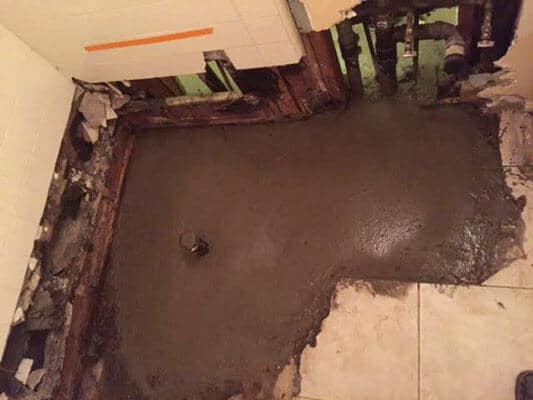
Slab leak detection in a San Diego home is one of those things you don’t think about until you’re standing barefoot on a kitchen tile that’s somehow warm in the middle of February. By the time most homeowners realize they have a slab leak, the water has been quietly working its way through the foundation for weeks or months. Catching it in the first stage saves your floors, your foundation, and a five-figure restoration bill. Here are the seven warning signs every San Diego homeowner needs to know.
What San Diego Customers Say on Google
Blue Planet is rated 4.5 out of 5 on Google from 149 reviews (October 2026).
“We had an issue with our main line pipe that flooded our front yard. They came very quickly, assessed the issue and made the repair. The technician was very personal and professional.”
Carl, 5-star Google review, 2026
“I had an excellent experience especially Mike the tech! They offered same-day service with a free estimate and a 30-day warranty.”
Joseph, 5-star Google review
Read more Blue Planet customer reviews
1. Unexplained Warm Spots on the Floor
The most classic sign — and the easiest to miss because it feels almost pleasant in winter. A pinhole leak in a hot-water line under the slab radiates heat upward through concrete and tile. If a single tile or section of flooring is consistently warmer than the surrounding floor with no obvious heat source, you have a hot-side slab leak until proven otherwise.
2. The Sound of Running Water When Everything Is Off
Turn off every faucet, washing machine, dishwasher, and toilet. Listen near walls and floors. If you hear a faint hiss or running-water sound, water is escaping somewhere it shouldn’t be. The pressurized leak under your slab will produce a consistent low-level sound that becomes obvious in a quiet house.
3. Your Water Bill Jumped With No Lifestyle Change
San Diego’s average residential water use is well-documented by the San Diego County Water Authority and the U.S. Geological Survey. A 20-30% jump in your monthly bill — with no new occupants, no irrigation changes, no leaks at visible fixtures — almost always means water is going somewhere it shouldn’t.
4. Mildew or Musty Smell Without a Visible Source
Slab leaks create the perfect environment for mold and mildew under your flooring. If a room smells damp without any visible water, the source is usually below the surface. Catch this early, because once mold takes hold in subfloor insulation or wall cavities, restoration becomes a serious project. Professional water-damage restoration services handle the post-leak mold and cleanup that follows when a slab leak is caught late — but the goal is to avoid that bill entirely by catching the leak first.
5. Cracked or Lifting Tile and Hardwood
Concrete slabs in San Diego homes are designed to handle the seasonal expansion and contraction of dry inland heat and coastal moisture. They are NOT designed to handle constant water saturation from below. A persistent leak causes the slab to shift slightly, which transfers to your finished flooring as cracked grout lines, lifting hardwood planks, or popped tiles in a single area of the room.
6. Low Water Pressure on One Side of the House
Slab leaks reduce the pressure available to fixtures downstream of the leak. If your kitchen and master bath have noticeably lower pressure than the rest of the house, the line feeding that zone has likely sprung a leak between the meter and the fixtures. This is especially common in older San Diego County homes built in the 1960s-1980s where the original copper supply lines are reaching the end of their useful life.
7. Foundation or Concrete Damage in the Yard
Pinhole leaks don’t stay pinhole forever. As the leak expands, water can erode the soil supporting your slab. Watch for new cracks in your foundation, cracks in concrete patios adjacent to the house, or soft spots in the yard near the foundation perimeter. The California Department of Water Resources publishes regional soil and water-table data that helps explain why some San Diego neighborhoods see more foundation movement than others.
What to Do If You Suspect a Slab Leak
Don’t wait. Don’t try to find it yourself. Slab leak detection requires acoustic listening equipment, infrared thermography, and pressure-testing tools that residential homeowners don’t have. The cost of a professional leak detection is a fraction of the cost of repairing collateral damage from a leak that ran for another month.
Steps the moment you suspect a slab leak:
- Shut off the water at the main if you can hear the leak running
- Document everything (photos, water bills, warm spots)
- Call a licensed plumber with proper detection equipment
- Notify your homeowner’s insurance — most policies cover the damage from sudden slab leaks, even if they don’t cover the pipe repair itself
A Note on San Diego County Specifically
San Diego homes have a few unique slab leak risk factors. Coastal humidity accelerates corrosion in older copper lines. Inland heat creates expansion stress on supply lines, especially in East County where summer highs are well into the triple digits. Many homes from the 1970s-1990s have soft copper that’s now in its failure window. If your home falls into any of those categories and you’ve noticed any of the seven signs above, the right move is a professional inspection sooner rather than later.
Trusted Local Network
When a slab leak ends up causing serious water damage, the path back to a dry, livable home often involves multiple trades — plumbing for the repair, restoration for the cleanup, and sometimes a renovation contractor for the rebuild. Two resources worth bookmarking: dedicated water damage restoration services for the post-leak cleanup, and slab leak detection and repair in the DFW Texas market for homeowners outside California facing similar issues in clay-soil regions.
Your San Diego Slab Leak Detection Specialists
Blue Planet Drains & Plumbing handles slab leak detection and repair across San Diego County — Chula Vista, San Diego, Bonita, Coronado, La Jolla, Del Mar, Carlsbad, Oceanside, Poway, and surrounding communities. Our leak detection service uses acoustic listening, infrared thermography, and pressure testing to pinpoint slab leaks with minimal invasive work. Contact us the moment you spot any of the seven warning signs above — every day a slab leak runs is more damage to your home.