Skip to content

Trenchless Sewer Replacement in Spring Valley, CA
Spring Valley is unincorporated county territory east of Lemon Grove and south of La Mesa — Sweetwater Reservoir on the southern boundary, a mix of older valley homes and newer hillside builds. The varied housing stock means the sewer-line situations vary too: 1950s cast-iron in the older blocks near Casa de Oro, 1970s clay in the central valley, newer PVC in the post-1985 builds. Trenchless replacement handles all three. Free estimate, on-site walk-through, written quote — that is how every Spring Valley job starts.
Trenchless Sewer Replacement in Spring Valley, CA
Local Sewer Insight: Spring Valley
Spring Valley is an unincorporated East County community of about 30,000 with a mix of older tract homes and rural-edge properties near Sweetwater Reservoir. Expansive clay soil and heavy root intrusion drive much of the trenchless sewer work we do here, replacing or relining brittle clay laterals with minimal digging.
Across Spring Valley’s larger rural-edge parcels, we reach long sewer runs from minimal access points instead of trenching the full length of the property.
Trenchless Sewer Conditions Across Spring Valley
Spring Valley sprawls across unincorporated East County between La Mesa, Lemon Grove, and the Sweetwater Reservoir, and its housing is a real mix: older post-war tracts, ranch homes on larger semi-rural parcels, and pockets that were on septic well into the modern era. That variety means we see everything here from original 1950s clay laterals to longer rural sewer runs, and the expansive clay soil common to the area is hard on all of it – it swells and shrinks with the seasons until joints crack and lines belly.
On the larger Spring Valley lots, a failing lateral can run a long way from the house to the street or to a connection point, and open-trenching that full length tears up driveways, landscaping, and sometimes mature grade. Pulling a new pipe through from a couple of access pits keeps the disruption to a minimum, which matters even more on the bigger Casa de Oro and Sweetwater-area properties where the run is long.
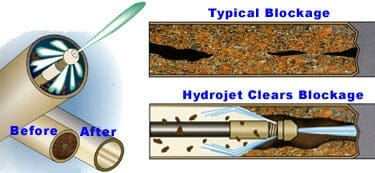
Roots are the other constant. The mature trees throughout Spring Valley’s established neighborhoods drive toward the moisture in any cracked clay joint and pack a line solid, so homeowners who keep cabling the same drain are usually paying to rent a problem they could permanently solve. A cured-in-place liner seals every joint at once and gives the roots nothing to enter.
Areas of Spring Valley we serve: Casa de Oro, the Sweetwater and Sweetwater Reservoir areas, the neighborhoods along Jamacha Road and Sweetwater Road, the Dictionary Hill area, and the streets bordering La Mesa, Lemon Grove, and Rancho San Diego.
If your Spring Valley home is on an older clay lateral, the early warnings are multiple slow drains, a toilet that gurgles when the washer empties, or a wet, foul-smelling patch over the line after rain. On expansive clay a small crack can become a collapse fast, so an early camera inspection is the cheapest way to keep the repair trenchless.
Spring Valley’s history runs through the Bancroft Ranch House, Dictionary Hill, and the trails of Sweetwater Summit Regional Park above the reservoir. The community mixes compact older neighborhoods near Sweetwater Road with larger parcels climbing toward the hilltops, so a sewer lateral here might be a short urban run or a long rural one. We size the trenchless approach to whichever a given Spring Valley property turns out to have.
Spring Valley also stretches up toward La Presa, Mount Miguel, and the SkyLine Church area along Sweetwater Springs Boulevard, where hilltop homes drain down to mains far below. Those vertical runs behave nothing like the flat coastal grids, and a misread on grade can send a snake the wrong direction entirely. Locating and cameraing the full Spring Valley lateral before we commit to a method is how we keep the bid honest and the dig minimal.
Sewer Line Trouble in Spring Valley, CA?
Signs Your Sewer Line Needs Replacement in Spring Valley, CA
Spring Valley spans a big elevation range — flat valley floor down by Skyline Drive, hill properties up toward Mt. Miguel. Hill-side laterals are the worst trenching candidates because of the grade and the access. With pipe bursting, the existing line guides the new pull no matter how steep. We have done trenchless replacements on driveways with a 15-degree slope where trenching would have meant shoring the walls of the dig.
Spring Valley trenchless decisions often involve mixed pipe materials — clay near the city tap, cast iron mid-yard, PVC where a previous owner did a partial repair. Trenchless sewer replacement covers four primary methods, plus camera inspection as the diagnostic step that determines which method fits a given line. The right call depends on what the camera shows: pipe material, severity of damage, line condition end-to-end, depth, and access constraints on the lot. The four methods below cover the realistic options for a Spring Valley residential lateral or a small commercial line. We walk you through which one is right for your specific situation as part of the on-site quote, including the trade-offs between methods on cost, longevity, and disruption.

Sewer Camera Inspection Across Spring Valley, CA
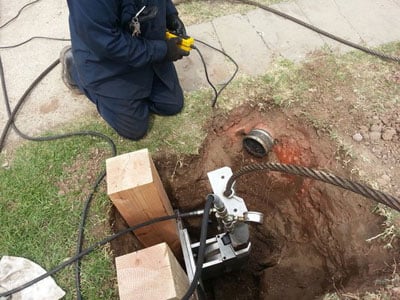
Camera inspection runs first. On Spring Valley lines the inspection often shows the boundary between newer and older pipe — at the property line, sometimes mid-yard where an older repair was made. The inspection determines feasibility and which method fits. We give you a copy of the Spring Valley camera footage either way — you keep it for your home’s records.
When Trenchless Beats Open-Trench in Spring Valley, CA
Trenchless wins in Spring Valley on hillside lots where excavation is hard, on longer rural-style lots near the reservoir where open-trench is impractical, and on any property with established landscape worth keeping. Open-trench can still make sense on raw shallow lots, but those are less common in central Spring Valley.
Mixed pipe materials make trenchless even more attractive here. Spring Valley lines often show clay near the city tap, cast iron mid-yard, and PVC where a previous owner did a partial repair. Open-trench excavation across all three materials is messy work; pipe bursting fragments all three uniformly and pulls a single continuous HDPE line through. One pull, one new pipe, one set of fittings at each end. Trenchless also avoids most of the noise, dust, and traffic disruption that open-trench creates on a Spring Valley street.
What to Expect on Job Day in Spring Valley, CA
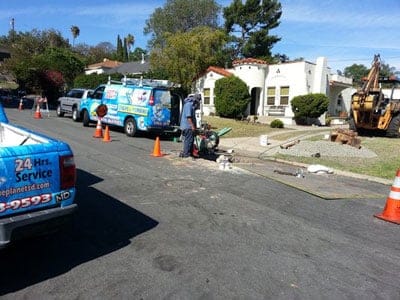
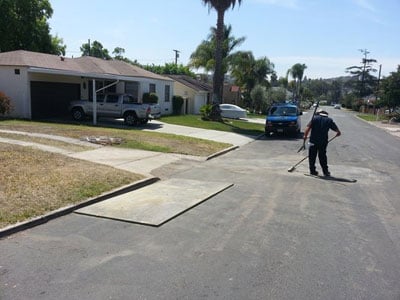
A Spring Valley trenchless day on hillside Casa de Oro often requires staging the bursting rig on the street with County DPW permit, since hillside driveways may not support the equipment weight. Trenchless sewer replacement on a typical Spring Valley property follows a predictable timeline. Crew arrives early — usually 7 or 8 AM — sets up cone barriers around the work zone, and digs the two access pits (one at the cleanout, one at the property line near the city main). Pit excavation takes 2-3 hours depending on depth and soil. The bursting equipment is set up at the pull pit, the steel cable is threaded through the existing line, and the bursting head is attached at the entry pit. By mid-morning the actual replacement is underway.
Why Homeowners in Spring Valley, CA Choose Trenchless Sewer Replacement
Yes. The existing grade is preserved by following the original line. Hillside access can require staging on the street, which we plan for in advance.
Properties within the reservoir watershed buffer can trigger review. Trenchless minimizes disturbance, which typically keeps the project under simpler permit thresholds. We confirm setbacks before quoting.
Common situation — older cast iron at the house, clay mid-yard, newer PVC at the city tap from a prior partial repair. Pipe bursting fragments all three. CIPP requires more careful sizing across material transitions.
Yes — the entire Spring Valley unincorporated area, plus the Casa de Oro and Mt. Helix-adjacent blocks.
Camera inspection within a couple of days. Quote same-day. Non-emergency scheduling within 1-2 weeks; emergency backups handled faster with temporary pumping while the permanent fix is planned.