Skip to content

Trenchless Sewer Replacement in Lemon Grove, CA
Lemon Grove has a real concentration of post-war housing — 1940s and 1950s tract homes through the older streets near Lemon Grove Avenue and Broadway, plus some hillside builds up toward Mt. Vernon. A meaningful share of those homes still have their original sewer laterals: cast iron, vitrified clay, and in some cases the cement-asbestos pipe (Transite) that was used briefly in the 1950s before its health risks were understood. Trenchless replacement handles all three pipe types safely. Free estimate, on-site walk-through, written quote — that is how every Lemon Grove job starts.
Trenchless Sewer Replacement in Lemon Grove, CA
Local Sewer Insight: Lemon Grove
Lemon Grove is an East County city of about 27,000 built largely of post-war homes along the 94 corridor. Aging clay sewer laterals and root-prone mature landscaping are the issues we resolve most often, and trenchless lining lets us fix them without tearing up established yards and driveways.
For Lemon Grove’s established post-war yards, trenchless lining preserves the mature trees and lawns that an open-trench replacement would otherwise tear out.
Trenchless Sewer Conditions Across Lemon Grove
Lemon Grove packs a lot of mid-century housing into a small East County footprint, and most of those homes went up between the 1940s and 1960s on modest lots along Broadway, Massachusetts Avenue, and the streets climbing toward Skyline. Their original clay sewer laterals are now sixty to eighty years old, and the seasonal swing between wet winters and bone-dry summers in this inland climate has worked the joints loose on a huge share of them. Cracked, root-filled, and bellied clay pipe is the single most common thing we find under a camera here.
The neighborhood’s mature street trees and backyard fruit trees – the city is literally named for its citrus history – are a second factor. Roots chase the moisture seeping from a hairline crack and pack a lateral solid, which is why so many Lemon Grove backups come back within weeks of a cabling. Lining the pipe seals every joint at once so there is nothing left for roots to enter, and it lasts decades longer than repeated snaking.
Lemon Grove’s compact lots also make open-trench work disruptive: the lateral usually runs under a driveway, a front walk, or close to the property line and the neighbor’s fence. Pulling a new pipe through from two small access pits keeps the job on your property and off the street, which avoids extra permitting along busy corridors like Lemon Grove Avenue and Broadway.
Areas of Lemon Grove we serve: the Broadway and Massachusetts Avenue corridors, the Skyline and Spring Street neighborhoods, the area around the Big Lemon and the trolley station, and the streets bordering La Mesa, Spring Valley, and the College area of San Diego.
If your Lemon Grove home still has its original clay lateral, the early signs are slow drains in more than one room, a toilet that bubbles when the kitchen sink empties, or a soggy, sour patch in the yard after rain. Catching it at the camera-inspection stage usually means a liner or a single spot repair instead of an emergency dig.
Old Pipe Failing in Lemon Grove, CA?
Signs Your Sewer Line Needs Replacement in Lemon Grove, CA
Lemon Grove is mostly 1950s and 60s tract homes on smaller lots, which means the sewer lateral is short — often only 30 to 50 feet — but the property is tight and a backhoe damages everything within ten feet. Pipe bursting is the right call here because the access footprint is small. Most of our Lemon Grove jobs are done before lunch and the homeowner is back on full plumbing by dinner.
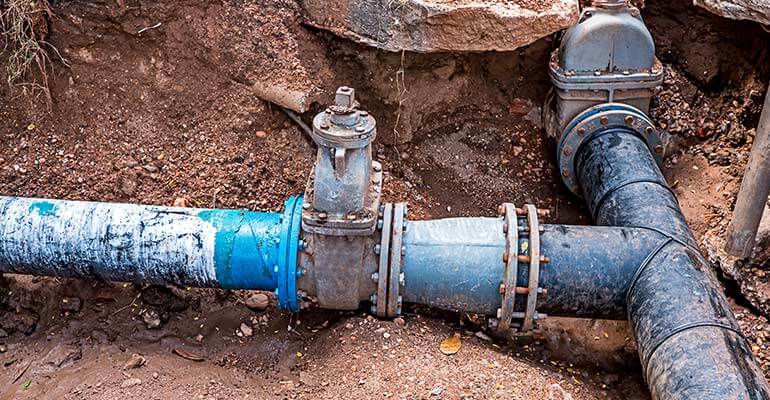
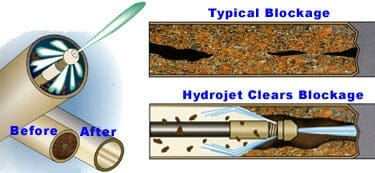
Lemon Grove trenchless decisions are frequently driven by the Transite-pipe question — open-trench on asbestos-cement lines is expensive, slow, and disposal-heavy in a way trenchless eliminates. Trenchless sewer replacement covers four primary methods, plus camera inspection as the diagnostic step that determines which method fits a given line. The right call depends on what the camera shows: pipe material, severity of damage, line condition end-to-end, depth, and access constraints on the lot. The four methods below cover the realistic options for a Lemon Grove residential lateral or a small commercial line. We walk you through which one is right for your specific situation as part of the on-site quote, including the trade-offs between methods on cost, longevity, and disruption.

Sectional Repair on a Lemon Grove, CA Sewer Line
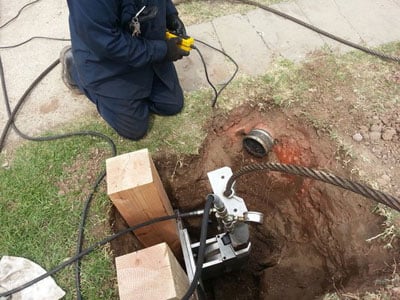
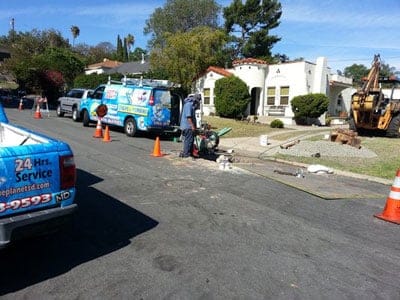
Spot repair on a single failure section without replacing the whole line. Short cured sleeve or small open-pit fix. Right when the camera shows one defined break and the rest is sound. On a Lemon Grove property, sectional repair often means saving thousands on a line that has 95% of its life left.
Camera Diagnostic on Older Lemon Grove, CA Sewer Pipe
Camera inspection comes first — and on Lemon Grove lines, the inspection often confirms what kind of pipe material we are dealing with. The footage helps us identify Transite (which has a distinctive surface texture) versus clay versus cast iron, which determines method and price. We give you a copy of the Lemon Grove camera footage either way — you keep it for your home’s records.
When Trenchless Beats Open-Trench in Lemon Grove, CA
Trenchless wins in Lemon Grove specifically because of the Transite question. Open-trench on an asbestos-cement line creates dust exposure and disposal complications. Bursting seals the fragments in place and pulls a clean new HDPE line through. Trenchless also wins on hillside Lemon Grove lots where excavation would mean major grade work.
Pipe material drives the math. A meaningful share of Lemon Grove laterals are vintage cement-asbestos (Transite) — a 1950s pipe whose removal under open-trench creates dust exposure, special handling, and disposal manifesting. Pipe bursting fragments the Transite outward into the soil and seals the fragments behind the new HDPE. The asbestos stays buried, contained, and inert. That alone makes trenchless the obvious choice on Transite lines. Trenchless also avoids most of the noise, dust, and traffic disruption that open-trench creates on a Lemon Grove street.
What Trenchless Sewer Replacement Costs in Lemon Grove, CA
Trenchless sewer replacement in Lemon Grove typically runs $4,500 to $12,000. Transite removal adds modest cost over standard clay-pipe bursting (special disposal manifesting), but is far cheaper than the open-trench alternative on an asbestos line. Larger commercial laterals scale higher; multi-unit properties under one parcel may qualify for a unit-rate discount across the entire job.
What to Expect on Job Day in Lemon Grove, CA
A Lemon Grove trenchless day on a Transite line includes special air-monitoring at the access pits — the bursting fragments stay buried in the soil, but pit-edge confirmation is standard procedure. Trenchless sewer replacement on a typical Lemon Grove property follows a predictable timeline. Crew arrives early — usually 7 or 8 AM — sets up cone barriers around the work zone, and digs the two access pits (one at the cleanout, one at the property line near the city main). Pit excavation takes 2-3 hours depending on depth and soil. The bursting equipment is set up at the pull pit, the steel cable is threaded through the existing line, and the bursting head is attached at the entry pit. By mid-morning the actual replacement is underway.
Why Homeowners in Lemon Grove, CA Choose Trenchless Sewer Replacement
Yes, in most cases. Surface texture, joint pattern, and color all read differently on the camera footage. We confirm material before quoting the method.
Yes — and hillside driveways are one of the strongest cases. Excavating and re-pouring a hillside driveway is expensive; pipe bursting avoids it entirely.
Sewer-lateral work tied to the city main on Broadway, Lemon Grove Avenue, or any of the cross-streets goes through Lemon Grove Building. We file the permit and handle the inspection.
Camera inspection within a couple of days. Same-day quote. Non-emergency work scheduled within a week or two; active backups handled faster.
Yes. Multi-unit laterals scale fine with trenchless methods, and the work can often be done with one set of access pits serving both units.