Skip to content

Installation and tank-to-tankless conversion
Tankless Water Heater Installation in San Diego, CA
Sizing, gas line, venting and condensate — the four things that decide whether a tankless install actually works.
Installing a tankless water heater is not a like-for-like swap. The unit draws far more gas at full burn than the tank it replaces, it needs its own venting, and a condensing model needs a drain for the condensate. Blue Planet Plumbing installs tankless units and converts tank systems across San Diego County, and we survey all four of those before quoting so the finished install performs the way the specification says it should.
Sizing: the decision everything else follows from
A tankless heater is rated on how much it can raise the temperature of water at a given flow rate. Get that wrong and the unit will not fail — it will simply run out of temperature whenever two fixtures are used at once, and the household will conclude tankless does not work.
So the survey starts with fixtures: how many showers, whether a tub fills at the same time as anything else, whether there is a laundry running through the day. Incoming water temperature matters too, and inland San Diego and the coast are not identical.
From that we get a required flow and rise, and from that a unit. Where the demand genuinely exceeds one unit, two smaller heaters in series is usually a better answer than one oversized one.
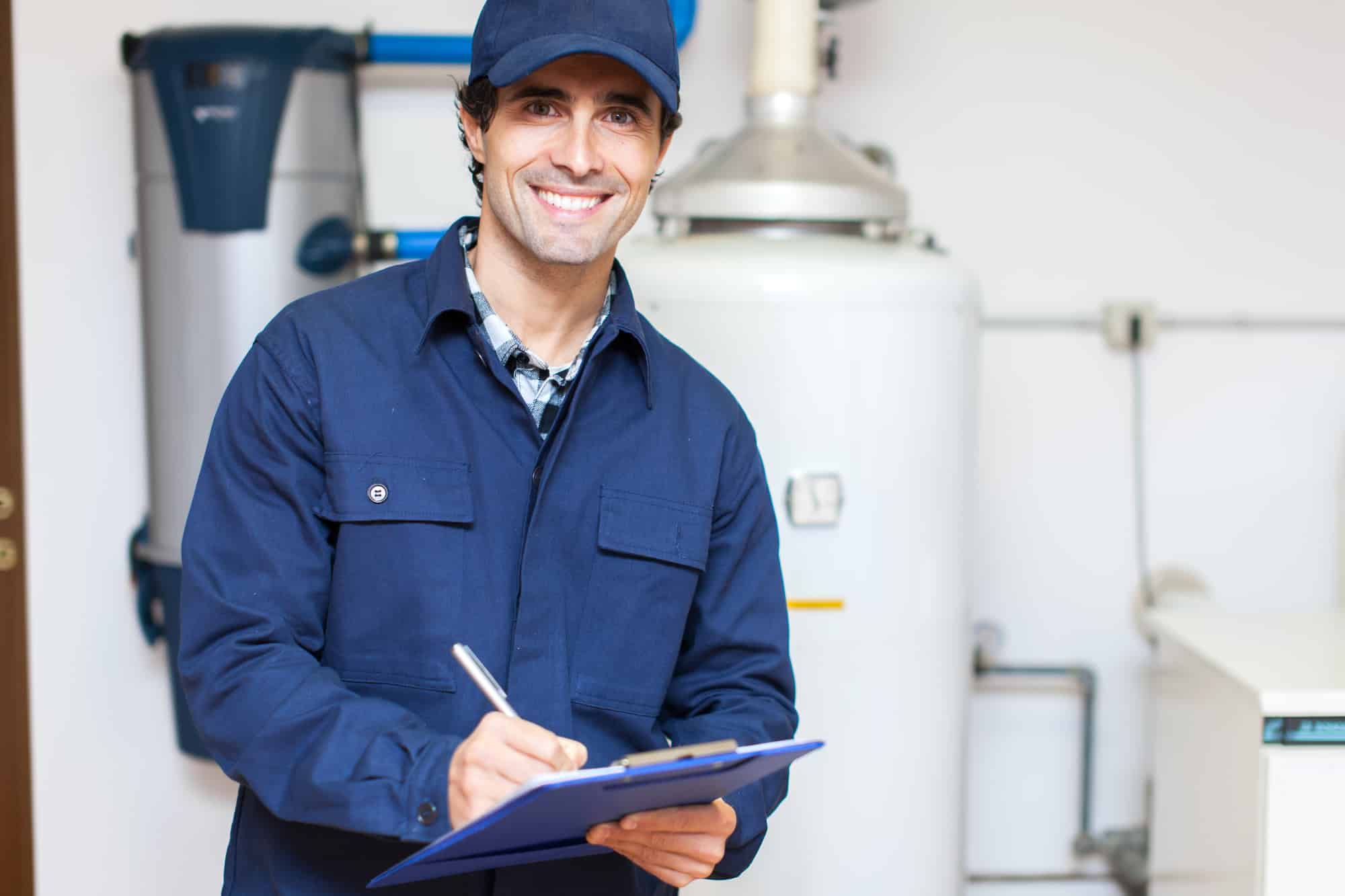
Gas supply and venting
This is where most conversions run into cost. A storage tank sips gas over hours; a tankless unit demands its full rate the moment somebody opens a hot tap. If the existing gas line and meter cannot deliver that, the unit will light and then drop out under load, which reads as a faulty heater and is nothing of the kind.
We size the gas run against the unit and the rest of the appliances on the meter, and where it needs upgrading we say so before the job rather than after. Our gas line repiping page covers that work.
Venting is the second item. A tankless unit cannot share the flue the old tank used; it needs its own vent, terminated where the manufacturer requires it. On a wall-hung exterior install that is straightforward. On an interior closet or a garage it drives the location.
Tank-to-tankless conversion
Converting means removing the tank, re-routing the water connections to the new unit, running new gas capacity if needed, installing venting and providing for condensate. It also frees up the floor space the tank occupied, which for a lot of San Diego garages is a real part of the reason people do it.
We have carried out conversions in La Mesa and Spring Valley, plus Navien installations in Chula Vista and Clairemont, Takagi work in Poway and San Diego, and Noritz servicing in Chula Vista. Those jobs are in our project log.
Isolation valves go on every install we do, because a tankless unit needs periodic descaling in this water and a unit without service valves turns a routine flush into a much bigger job.
After the install
San Diego water is hard, and hard water scales a heat exchanger. An install that includes isolation valves lets the unit be flushed without draining anything else, and that single detail does more for the working life of a tankless heater than any other.
If the unit later throws a fault code or starts running cold part-way through a shower, our tankless water heater repair page covers what those symptoms usually mean.
If you are still deciding between tankless and a conventional tank, our water heaters and tankless water heaters pages set out both.
Where the unit ends up going
Location is decided by venting and clearances more than by preference. Manufacturers set minimum distances from windows, doors and air intakes for the vent termination, and those requirements usually rule out one or two of the walls people first suggest.
Exterior wall-hung installs are the simplest where the climate allows them, and in most of San Diego County it does. Garage installs are common and work well provided the vent route is short and the unit is clear of vehicles. Interior closets are possible but need the vent, the condensate drain and service access all resolved in a small space.
We walk the options with you on the survey rather than deciding for you, because the trade-off between the tidiest location and the cheapest one is a decision the household should make with the numbers in front of it.
What the install survey covers
| What we survey | Why it matters | What it changes |
|---|---|---|
| Fixture count and simultaneous use | Sets the flow rate the unit must serve | Which unit, or whether two are needed |
| Incoming water temperature | Determines the temperature rise required | Output rating of the unit |
| Existing gas line size and meter load | A starved unit drops out under full burn | Whether the gas run needs upgrading |
| Vent route and termination point | A tankless unit cannot reuse the tank flue | Where the unit can physically go |
| Condensate drainage | Condensing models produce condensate | Drain provision at the chosen location |
| Mounting location and clearances | Service access and manufacturer clearances | Interior closet, garage wall or exterior |
| Isolation valves for future flushing | Hard water means periodic descaling | Fitted as standard on our installs |
Tankless installation FAQs
Can I just swap my tank for a tankless unit?
Not directly. The new unit needs its own venting, it usually needs more gas than the tank did, and a condensing model needs somewhere for condensate to drain. Those three items are what the survey is for, and they are why a conversion is quoted rather than priced off a model number.
Will one tankless unit run two showers at once?
That depends entirely on the flow rate and the temperature rise your house needs, which is what we measure on the survey. Where demand is genuinely beyond one unit, two smaller heaters set up in series usually works better than a single oversized one.
Why would my gas line need upgrading?
A storage tank draws gas slowly over a long period. A tankless unit demands its full rate the instant a hot tap opens. If the existing run and meter cannot supply that, the unit lights and then cuts out under load — which looks like a faulty heater but is a supply problem.
Do you install Navien, Takagi and Noritz?
Yes. Those are among the units we install and service most across San Diego County, alongside Rinnai and Rheem. Our project log includes Navien installations in Chula Vista and Clairemont and Takagi work in Poway.
What are isolation valves and do I need them?
They are service valves either side of the heater that let the unit be flushed without draining the rest of the system. In water as hard as San Diego’s, a tankless unit will need descaling at some point, and a unit fitted without them makes that a much larger job. We fit them as standard.
Does going tankless free up space?
Yes — removing a storage tank gives back the floor area it stood on, and the tankless unit hangs on a wall. For garages and utility closets that is often as much of the reason for converting as anything to do with hot water.
Related pages: tankless water heaters, tankless water heater repair, water heaters, gas line repiping, plumbing in Poway and Chula Vista plumbing.
Book a tankless installation survey
Tell us what you have now and how the hot water gets used, and we will size the job properly before quoting.