Skip to content

Outdoor taps and spigots
Hose Bib Replacement in San Diego, CA
Hose Bib and Outdoor Spigot Replacement in San Diego, CA
A tap that drips when it is off, weeps behind the wall or splits after a cold night gets replaced, not patched.
Call (760) 561-5517 Request serviceThe hose bib is the tap on the outside wall, and it is the fitting most likely to be leaking on a San Diego property without anyone treating it as a plumbing problem. It drips into a flowerbed where nobody sees it, or it weeps inside the wall where the water has somewhere much worse to go. Blue Planet Plumbing replaces hose bibs and outdoor spigots on homes across San Diego County, and this page covers what fails, what the replacement involves and when it is worth doing more than swapping the tap.
How to tell a hose bib is finished
- It drips from the spout when it is fully closed, and turning it harder no longer stops it.
- Water escapes around the handle or the stem while the tap is running.
- The handle turns but the flow barely changes, or the tap has to be worked back and forth to shut.
- The body is corroded, the threads are chewed and a hose no longer seals on them.
- The wall, the siding or the stucco below the tap stays damp, or the paint is lifting under it.
The first two often are a washer or a stem, and on a sound tap that is a repair. The last two are not: a corroded body and damp wall mean the fitting or the pipe behind it is losing water, and a new washer will not change that.
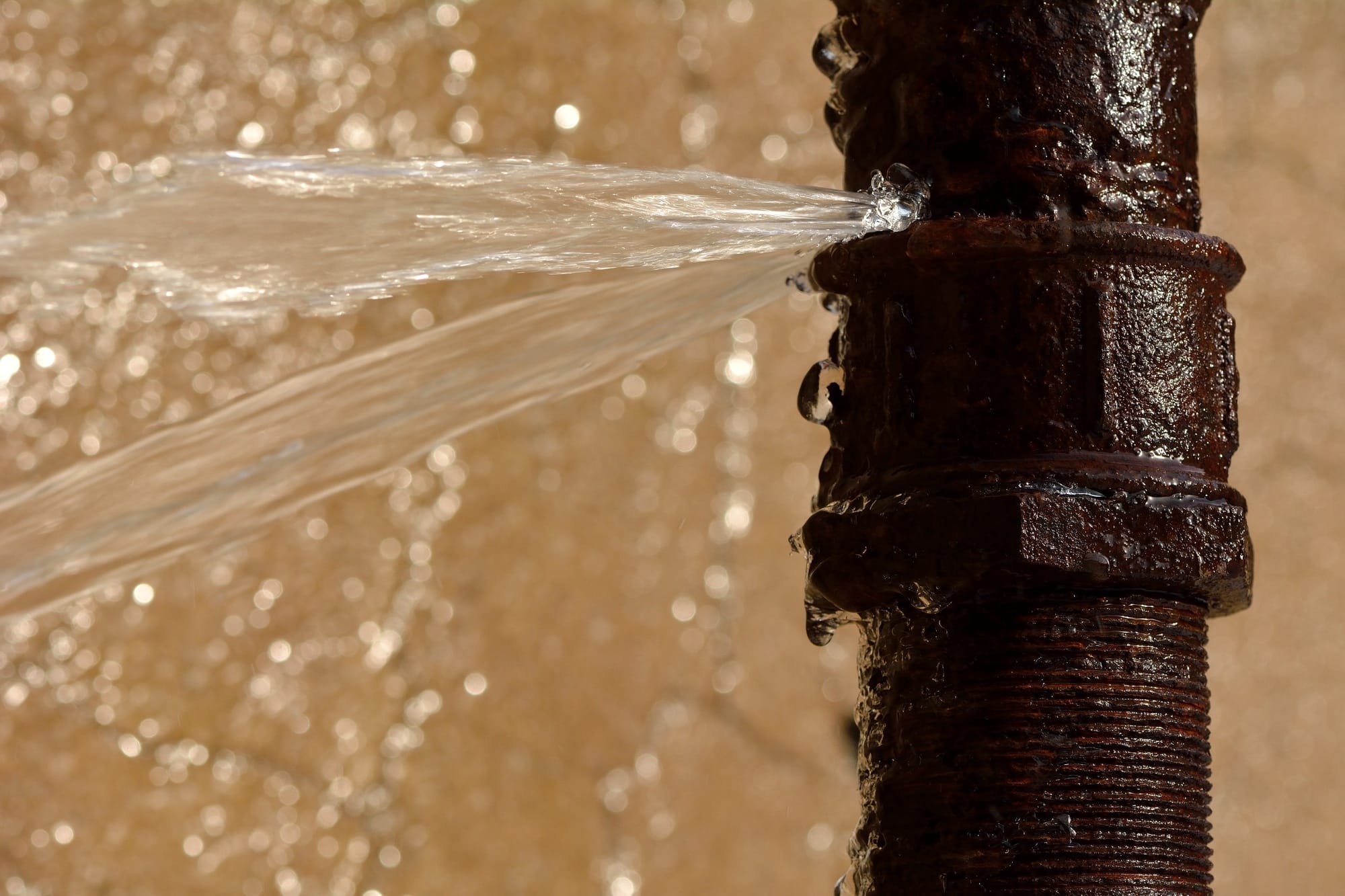
An outdoor leak is not only wasted water
A dripping outdoor tap looks harmless because the water lands outside. The part that matters is the section of pipe behind the wall. When a hose bib leaks at the connection rather than the spout, water tracks along the pipe, into the wall cavity or under the slab, and the first visible sign can be a stain on an interior wall or a rise in the water bill with nothing running. That is the same trail we follow on other jobs through leak detection, and it is why a weeping outdoor tap is worth dealing with rather than living with.
The other reason to replace rather than tolerate: an old hose bib with a hose permanently screwed to it is a cross-connection risk. A modern replacement with a vacuum breaker keeps whatever is in the hose out of the house supply, and fitting one costs nothing extra when the tap is coming off anyway.
How the replacement is done
The supply is isolated, the line drained and the old fitting removed. What happens next depends on what is behind the wall. Where the bib is threaded onto a sound stub, the new one goes straight on. Where the stub itself is corroded, split or has been repaired before, the pipe is cut back to sound material and a new section fitted, and that is the point at which a straightforward swap becomes a short piece of pipe work. If the run behind the tap is old galvanised pipe, we will say so, because a new tap on a failing pipe is a temporary result and you should hear that before the work starts, not after.
Once the new fitting is on, the line is charged and the tap checked under pressure, including the wall behind it, because a joint that looks dry dripping into a bucket can still weep when the line is at full pressure. We also check that the tap turns off properly and that the hose thread seals, which is the whole point of the exercise.
Frost-free, anti-siphon and choosing the fitting
Not every replacement is a like-for-like. A frost-free hose bib puts the shut-off well inside the wall, which is worth having on an exposed elevation. An anti-siphon or vacuum-breaker fitting stops backflow from a connected hose. Where a tap is used with a pressure washer or an irrigation line, the fitting and the pipe supplying it both need to suit that use. We fit the one that matches the wall, the pipe and how the tap is actually used, rather than whatever came off it.
Related work on the site
There is a walkthrough on our blog covering how to replace a hose bib if you want to see the sequence before deciding whether to take it on. For a job we did, see a leaking hose bib replacement in Tierrasanta, San Diego. If the leak turns out to be behind the wall rather than at the tap, pipe repair is the relevant service, and dripping indoor taps are covered on our faucets page.
Book an outdoor tap replacement
Send us a photo of the tap and the wall around it through the form below, or through the contact page, and say whether the drip is at the spout, at the handle or on the wall. That one detail is usually enough to tell whether this is a fitting swap or a piece of pipe work, and it means we arrive with the right parts on the van.
What the tap is doing, and what it usually means
Outdoor tap and hose bib FAQs
Can I replace a hose bib myself?
Some people do. It depends on what is behind the wall: a threaded bib on an accessible stub is one job, a soldered or crimped connection buried in stucco is another. If the shut-off is seized, or you cannot isolate that line, stop there. Our post on how to replace a hose bib walks through what the work involves.
What is the difference between a frost-free hose bib and a regular one?
A frost-free bib puts the valve seat well back inside the warm wall, and the body is pitched so water drains out of it when you close the tap. A standard bib holds water right at the outside wall. That trapped water is what splits a body on a cold night, which is why the frost-free version is the usual replacement.
Why is my outdoor tap leaking behind the wall?
Because the failure is at the connection rather than the spout. The joint where the bib meets the supply pipe sits inside the wall, and once it weeps the water tracks down inside the cavity. You often see it as a damp patch indoors before you see anything outside. That is a leak detection job before it is a tap job.
What does an anti-siphon hose bib actually do?
It stops water in a hose being pulled back into the house supply if the pressure drops. A hose lying in a pool, a bucket or a bed of fertiliser is the usual worry. The vacuum breaker on the bib opens to air instead, so nothing gets drawn backwards. Most replacements we fit include one.
My outdoor tap drips even when it is off. Is that worth fixing?
Yes. A steady drip runs day and night, and outdoors nobody hears it. It also keeps the wall and the ground beside it wet, which is how the fitting behind the tap corrodes and how the damp gets into the wall. Replacing a bib is a small job compared with what a long, ignored drip does to the wall.
Do you replace outdoor taps on a stucco wall?
Yes. Stucco means we open a small section carefully rather than cutting a large hole, and we work back to a sound piece of pipe before fitting the new bib. Where the pipe behind it has corroded, the work turns into a short pipe repair as well, and we will tell you that before we start.
Where we replace outdoor taps
We take outdoor tap and spigot calls around the county, including La Jolla, Del Mar, Poway, Carlsbad, Rancho Santa Fe, Lakeside, Coronado and Bonita; the rest are listed on our service areas page. Related work sits under faucets, sink repair and replacement and slab leak repair.
More on this from our blog: my faucet keeps dripping, what can I do and how to replace a hose bib.
Request service
Book an outdoor tap replacement in San Diego, CA
Tell us where the tap is, what the wall is made of and whether you can shut that line off. That is usually enough for us to bring the right fitting.
Call (760) 561-5517 Contact usOur service area